AI in Business
AI translation in the company: Fast, consistent, GDPR-compliant
Free translation tools are convenient — until a contract or a personnel file ends up in them. How companies can use AI translation productively and in compliance with data protection regulations.
Few AI applications are as commonplace as translation—and few are as underestimated in terms of risk. Those who need to quickly translate an email, a quote, or a contract into another language often reach for the first free tool they find. The problem: as soon as a contract, a personnel file, or a quote containing customer data is entered, personal and business-critical information leaves the company uncontrolled.
Why generic tools reach their limits
Public translation tools have three weaknesses in corporate use. First, data protection: inputs are often further processed by free services, and the server location is frequently outside the EU — the same issue as with anyShadow AISecond, the terminology: a generic tool is not familiar with your company's internal technical terms, product names, and tone of voice. Third, the context: without knowledge of the target audience and purpose, translations may be technically correct but inappropriate.
This is what a clean process looks like.
Enterprise-grade AI translation is not a single click of a button, but rather a short process that brings quality and data protection together:
The difference compared to copying and pasting into a web tool: the source text remains in a controlled environment, the company's own glossary ensures consistent terminology, and human review remains the final step for sensitive documents. A large language model can do more than just pure translation—it maintains tonality, can distinguish between formal and informal styles, and can provide a summary at the same time if required.
Translation is a prompt — use that
Because modern AI translation runs via a language model, the same levers apply as withPrompt EngineeringYou can specify the target audience, register, and format ("translate for a technical professional audience, formal, maintain bullet points"). This makes AI translation more flexible than traditional translation software—provided it runs on a data-protection-compliant basis.
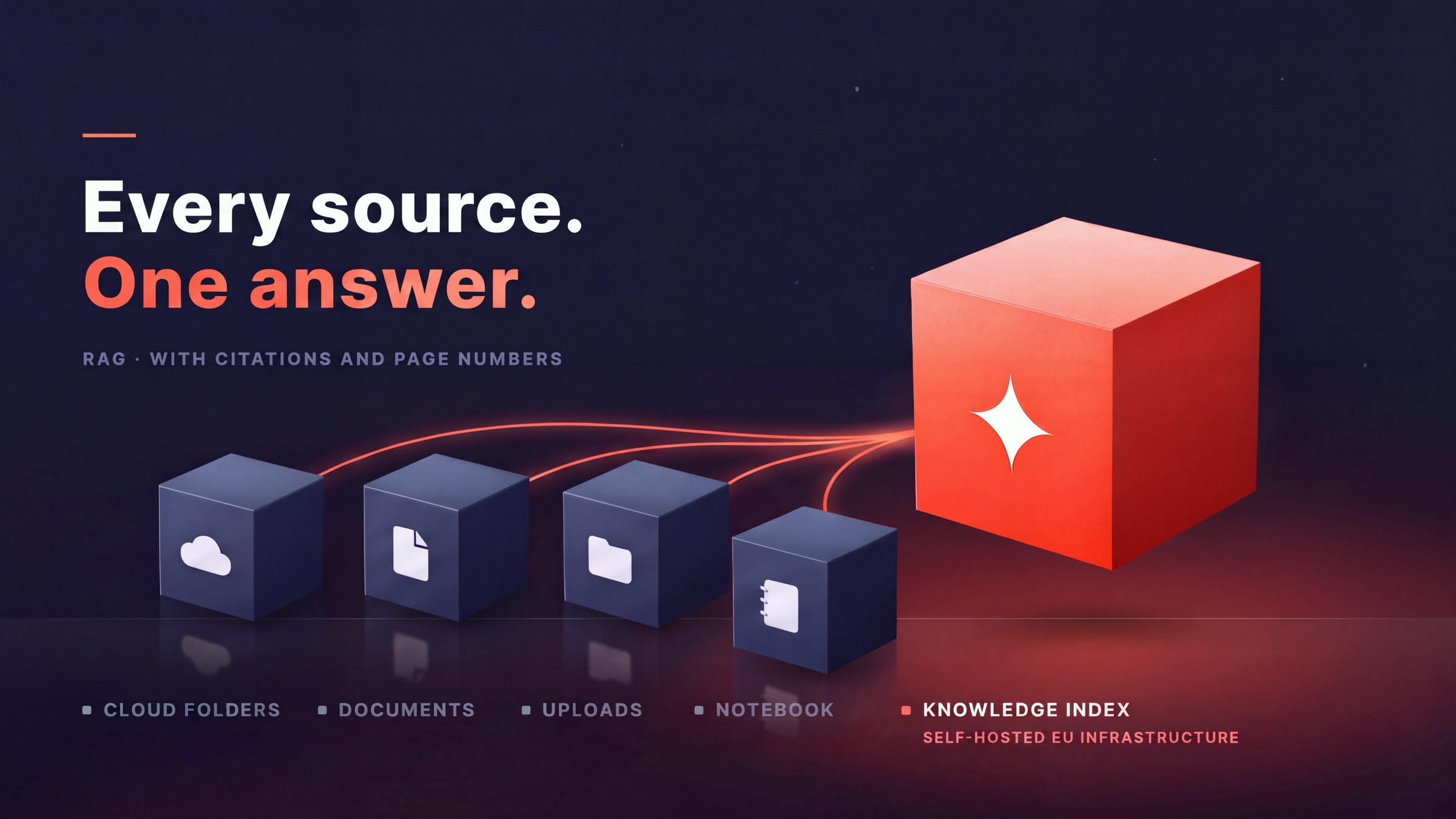
In Kasimir, translation runs on the same sovereign platform as chat and document analysis — operated in a German data center, with a company-wide glossary, and without your texts leaking to external services.
Conclusion
AI translation saves an enormous amount of time in everyday life—but only if data protection and terminology are correct. The solution is not to ban translation (as everyone will then switch to free tools), but to offer a secure, approved alternative. Our [link/video/etc.] shows what such a platform looks like.Guide to the AI Platform for Medium-Sized Businesses.
Bitkom — Employees use shadow AI (2025)
DSK — Guidance on AI and Data Protection (2024)
GDPR-compliant AI from a real German data center
Kasimir runs on its own infrastructure in Germany — no detour via US providers, no CLOUD Act reach.