AI in Business
AI Automation in the Company: Where It Actually Saves Time
Not every task requires a human—but not every task can be automated either. How AI takes over recurring processes, where the limits lie, and how to get started effectively.
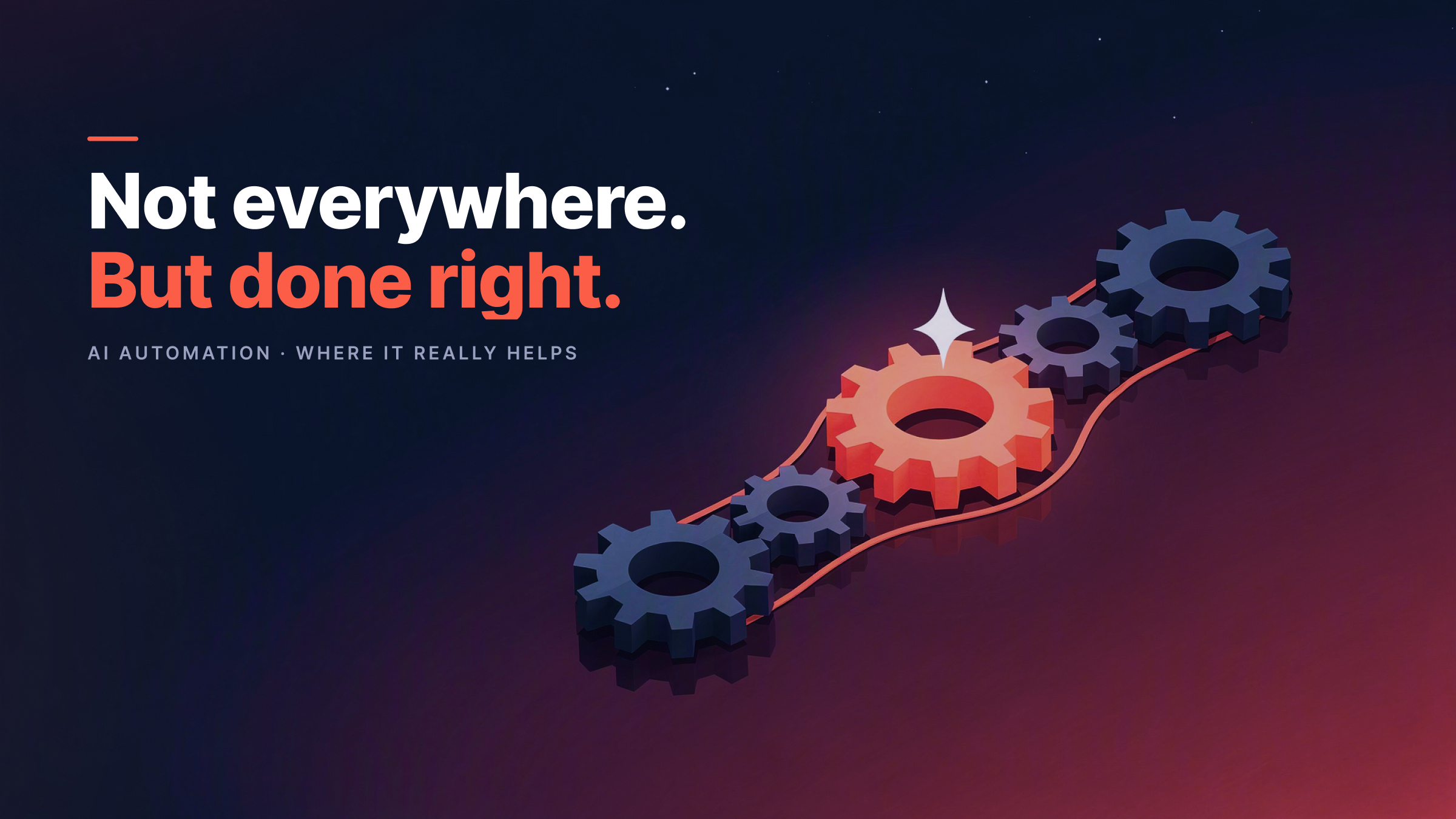
Automation in the company is not new — invoices, forms, and approvals have long been handled via software. What is new is what generative AI adds: it can [work] withunstructuredHandling content. Reading and categorizing an email, summarizing a PDF, extracting relevant fields from free text — this is exactly where AI steps in, where classic automation failed due to rigid rules.
How an AI-powered workflow works
At its core, almost every AI automation follows the same pattern: a trigger starts the process, the AI processes the content, a rule makes a decision, and this leads to an action:
The division of roles is crucial: humans define the rules and retain control over critical decisions, while the AI handles the repetitive grunt work in between. For sensitive steps, a "human in the loop" remains—the AI suggests, and the human approves.
Realistic use cases
Document processing— read incoming invoices, quotes, or contracts, extract the relevant data, and enter it into the system.
Email and Ticket Triage— Classify, prioritize, and assign inquiries to the correct department.
Summaries— condense long reports, minutes, or threads to the essentials.
Research & Preparation— Bundle information from multiple documents and output it in a structured format.
The next step beyond fixed processes isAI agents, which plan several steps themselves — exciting, but with its own requirements for control and traceability.
Where the boundaries lie
AI automation is not a self-running process. It is only as good as the data it works with and requires clear rules for handling uncertainty—a model should prefer to escalate rather than guess. Furthermore, it touches upon data protection: where personal data is processed automatically, the GDPR applies and, depending on the case, theAI ActAutomated processing should therefore be on a controlled, GDPR-compliant platform—not in scattered individual tools.
Because AI automation in Kasimir runs on the same sovereign platform as chat, RAG, and document analysis, data and governance remain in one place—instead of being scattered across dozens of siloed solutions.
Conclusion
Start small: a recurring, annoying process that is clearly structured and requires no critical decision at the end. From there, trust grows—and so does the automation. A secure platform provides the framework for this; our [guide/article/etc.] shows you how to choose one.Guide to the AI Platform for Medium-Sized Businesses.

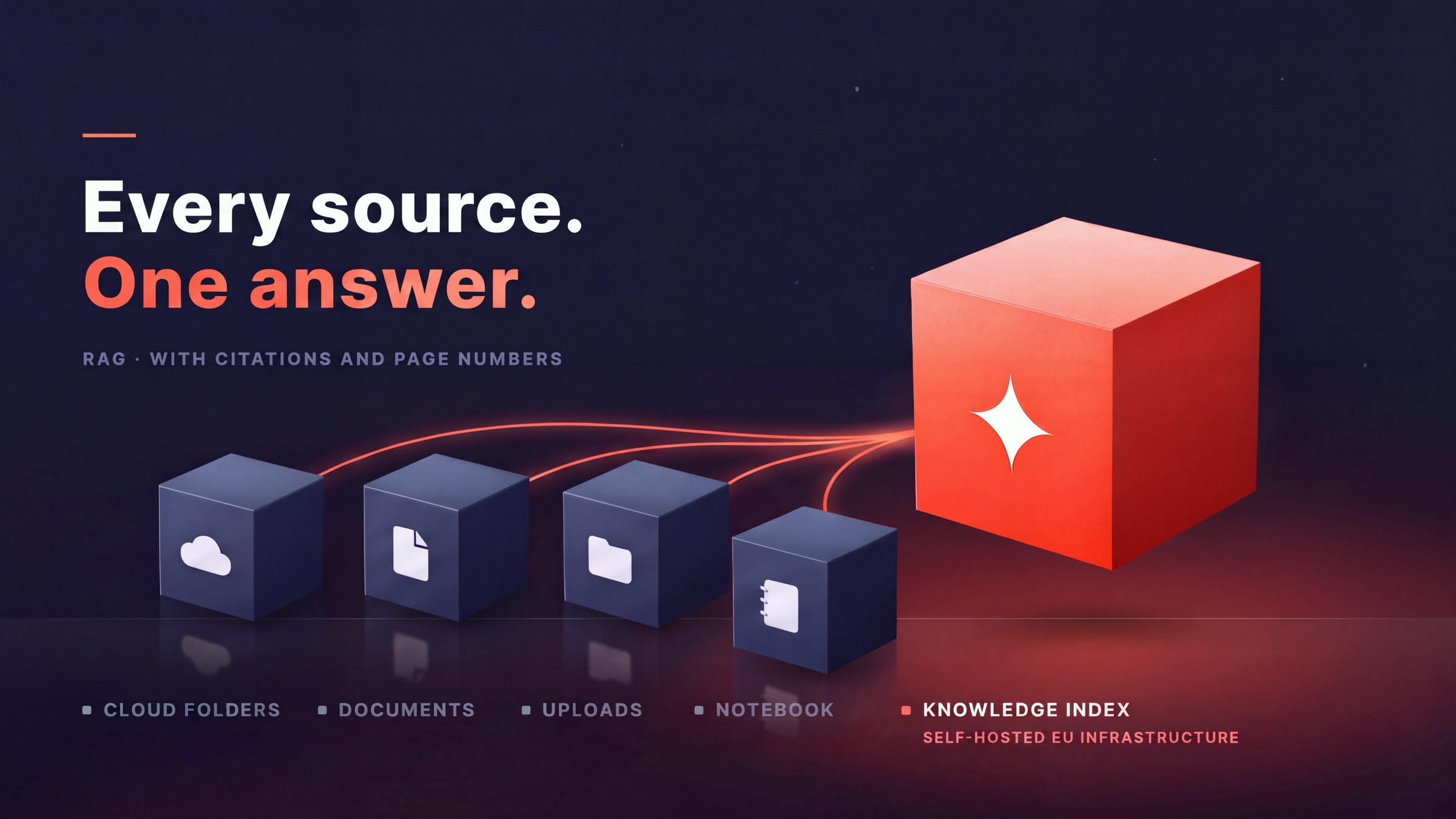

GDPR-compliant AI from a real German data center
Kasimir runs on its own infrastructure in Germany — no detour via US providers, no CLOUD Act reach.